Framework Laptop 13 Pro review: Linux MacBook rival
Framework Laptop 13 Pro review: Linux MacBook rival
https://tbreak.com/framework-laptop-13-pro-review-linux/
Publish Date: 2026-04-21 23:31:00
Source Domain: tbreak.com
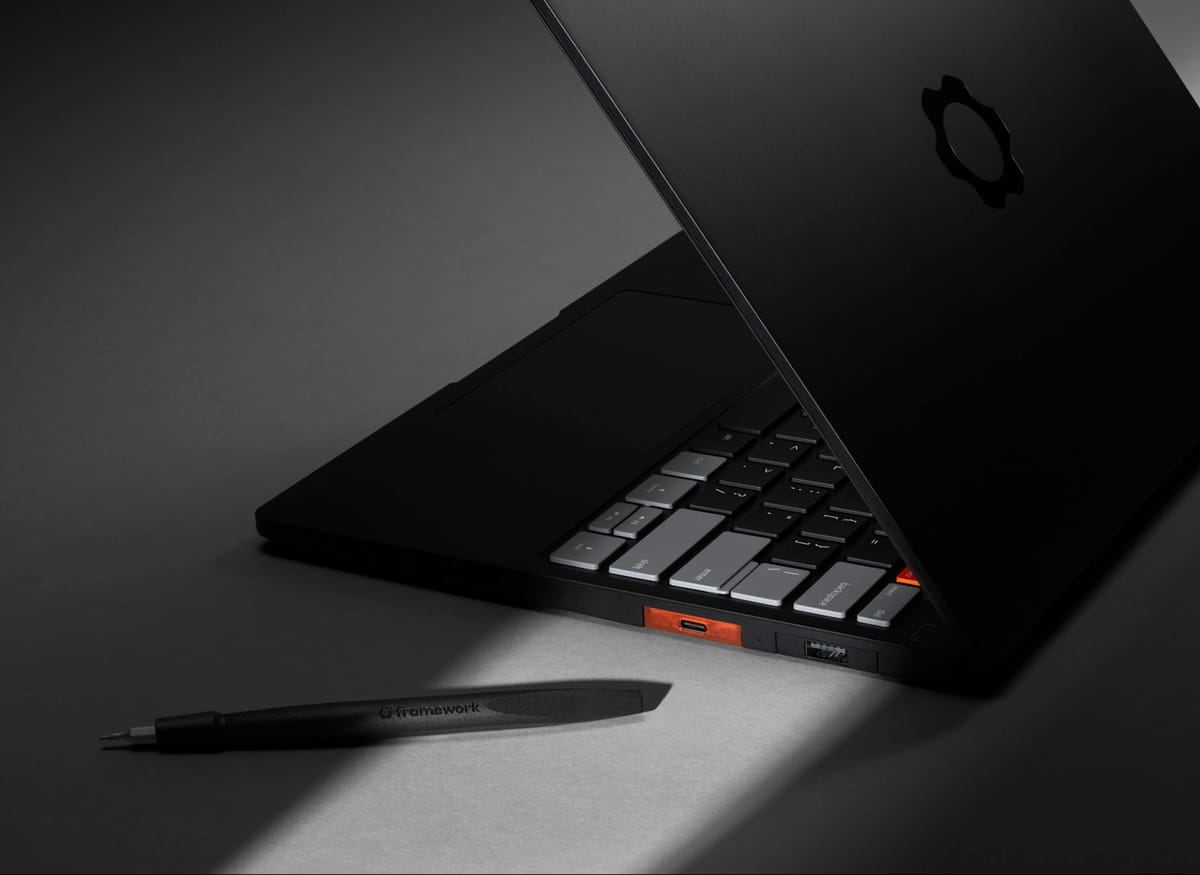
Framework has launched the Laptop 13 Pro, positioning it as “the MacBook Pro for Linux users” with a Core Ultra 3 processor and 20-hour battery life claims. The modular laptop features a custom 30-120Hz VRR screen and represents Framework’s push into premium Linux computing in April 2026.
Key Takeaways
- Framework Laptop 13 Pro features Core Ultra 3 processor and claims 20-hour battery life.
- The modular laptop includes a custom 30-120Hz VRR screen and LPCAMM2 memory.
- Framework markets it as ‘the MacBook Pro for Linux users’ with full repairability.
- UAE availability and pricing remain unannounced for this niche but growing market.
- The launch includes new accessories like first-party eGPUs and expansion cards.
What makes the Framework Laptop 13 Pro different?
According to Framework’s announcement, the Laptop 13 Pro delivers a 22% larger and denser battery than its predecessor, claiming 20 hours of 4K Netflix playback — potentially outlasting Apple’s M5 MacBook Pro. The custom VRR screen operates at 30-120Hz, adapting to content for better battery efficiency.
The laptop uses LPCAMM2 compression-mounted memory, a newer standard that saves space whilst maintaining upgradeability. This fits Framework’s modular philosophy — every component can be swapped, upgraded, or repaired without voiding warranties.
Beyond the laptop itself, Framework announced first-party eGPUs for serious graphics work, one-piece touchpad-keyboard decks for the Laptop 16, and a 10Gbps Ethernet expansion card. There’s even a “couch keyboard” designed for living-room PC setups.
Why Framework targets Linux users specifically
According to The Verge’s coverage of the San Francisco launch event, Framework emphasised right-to-repair and modular ownership throughout the presentation. Linux users historically value these principles — they prefer control over their software and increasingly their hardware.
With Linux gaming reaching new heights, there’s growing demand for laptops that ship…