Trump signs executive order setting rules for mail-in voting and eligibility lists
Trump signs executive order setting rules for mail-in voting and eligibility lists
Publish Date: 2026-03-31 20:48:00
Source Domain: www.nextgov.com
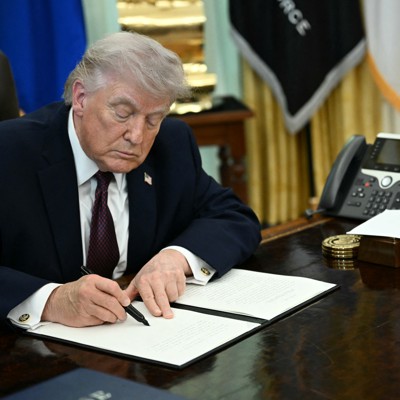
President Donald Trump on Tuesday signed an executive order targeting nationwide mail-in voting rules, including directing his administration to implement trackable mail ballot identifiers and to create a list of U.S. citizens confirmed eligible to vote in their respective states.
The order, which will certainly face legal challenges, comes as consequential midterm elections approach in November. It represents some of the most significant moves the Trump administration has taken to date to exert more control over the election administration process.
The directive mandates that the Department of Homeland Security collaborate with the Social Security Administration to create a comprehensive list of verified U.S. citizens eligible to vote in each state. It also directs the U.S. Postal Service to start a rulemaking process that would require states to inform the agency about voters requesting mail-in ballots, as part of a measure that would prohibit voters from getting a mail-in ballot unless they are on a USPS-approved eligibility list.
Beyond the citizenship provisions, the order also directs requirements for barcoded ballot envelopes, state-submitted voter participation lists and centralized tracking of mail-in ballots.
The president’s distrust of mail-in voting is rooted in a mix of longstanding concerns about voter fraud, which were sharply amplified during the pandemic-era expansion of mail voting in 2020 and reinforced by his post-election legal fights.
It’s unclear how the administration would reliably determine which state a voter resides in using federal datasets that are not designed for real-time address verification.
The order also leaves open a range of technical questions, including how records from DHS, SSA and the Postal Service would be matched and updated across systems, what security standards would govern those data streams and how officials would prevent errors, manipulation or unauthorized access to newly created voter-related…