KFF Tracking Poll on Health Information and Trust: Use of AI For Health Information and Advice
KFF Tracking Poll on Health Information and Trust: Use of AI For Health Information and Advice
Publish Date: 2026-03-25 05:03:00
Source Domain: www.kff.org
Key Takeaways
- With the recent explosion of consumer artificial intelligence (AI) tools and chatbots, KFF’s latest Tracking Poll on Health Information and Trust finds about a third (32%) of adults are turning to AI for health information and advice. This includes about three in ten (29%) who say they’ve used AI tools in the past year for information or advice about their physical health, and one in six (16%) who’ve used them for mental health information or advice. AI use is on par with the share who say they turn to social media for health information, but lags behind the shares saying they’ve sought health information from health care providers and internet search engines (where they may be encountering AI generated results, even if they are not looking for them).
- Larger shares of younger adults, uninsured adults, Black adults, and Hispanic adults are turning to AI chatbots for mental health advice. About three in ten (28%) of those ages 18 to 29 say they’ve used AI for information about their mental health or emotional wellbeing in the past year, compared to about one in five (18%) adults ages 30 to 49 and about one in ten of those ages 50 and older. Uninsured adults are more likely than insured adults to say they’ve relied on AI for mental health advice (30% v. 14%), as are Black (21%) and Hispanic (19%) adults compared to White adults (12%).
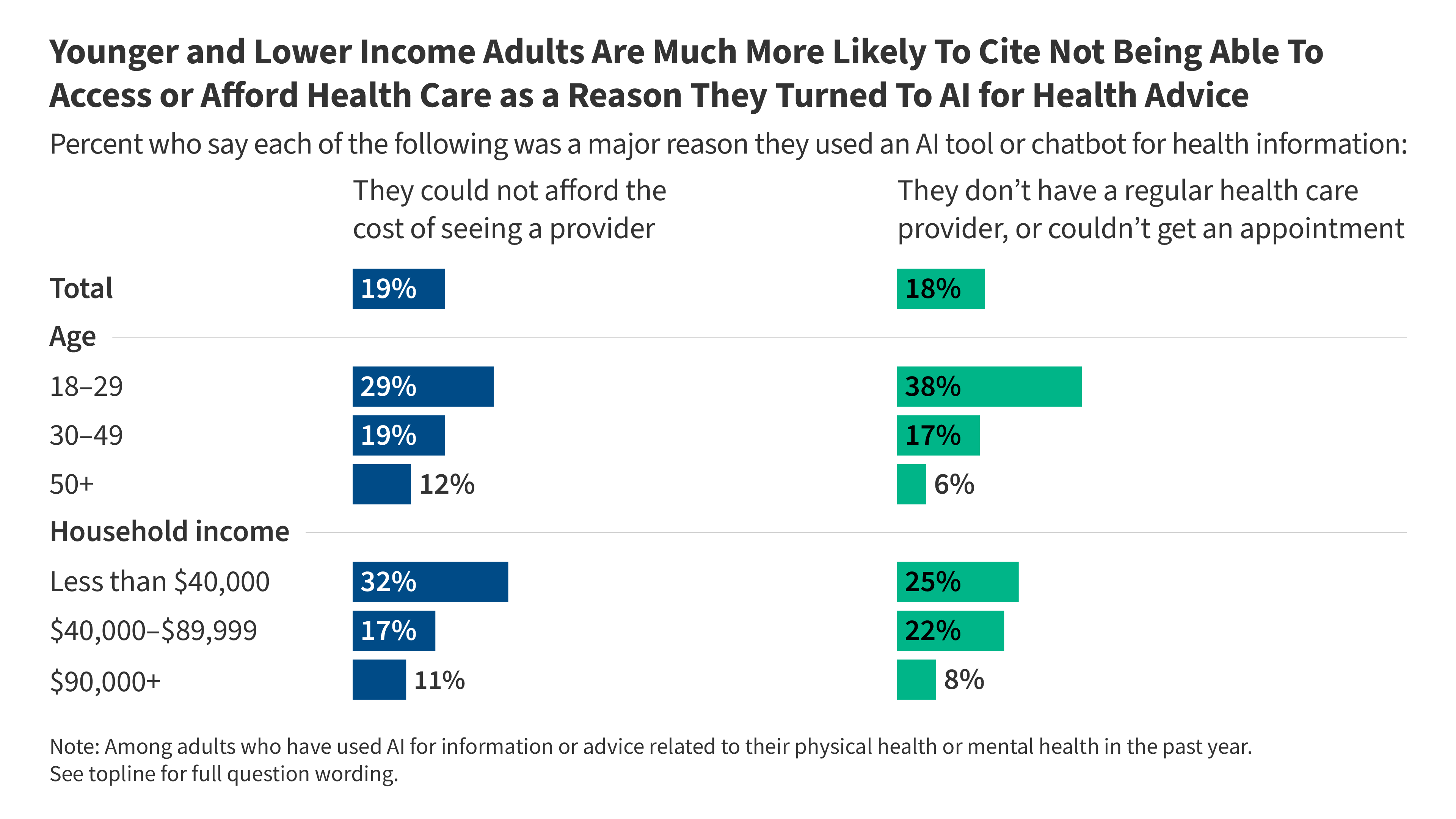
- Among the top reasons given for turning to AI for health information, most users (65%) say a desire for quick and immediate advice was a “major reason,” for doing so, while many also cite wanting to look up information before seeing a provider (41%) or feeling more comfortable looking up health questions privately (36%). Difficulty accessing or affording health care is also driving some to rely on AI for health information, particularly younger and lower-income users. About one in five AI health users cite not having a health care provider or not being able to get an appointment as a major…