OKC VeloCity | Oklahoma Invests in Key Safety Technology to Advance Autonomous Aviation
OKC VeloCity | Oklahoma Invests in Key Safety Technology to Advance Autonomous Aviation
Publish Date: 2026-02-23 01:01:00
Source Domain: www.velocityokc.com
Oklahoma is continuing to build momentum in autonomous aviation with a state-backed research project focused on one of the industry’s most critical safety challenges: how uncrewed aircraft safely share airspace with other aircraft.
In January, the state awarded OCAST funding for a year-long research effort to advance onboard detect-and-avoid technology for uncrewed aircraft. Detect-and-avoid, often referred to as DAA, allows an autonomous aircraft to detect other air traffic, track potential conflicts, and take action to maintain safe separation. The capability is widely considered a prerequisite for routine beyond visual line of sight flights, a regulatory and technical hurdle that must be cleared before applications like large-scale drone operations and advanced air mobility can expand.
The work is being carried out by Vigilant Aerospace Systems with flight testing support from the Oklahoma Aerospace Institute for Research and Education at Oklahoma State University. The project is supported by the Oklahoma Center for the Advancement of Science and Technology, which invests in applied research aimed at advancing technologies important to the state’s long-term economic growth.
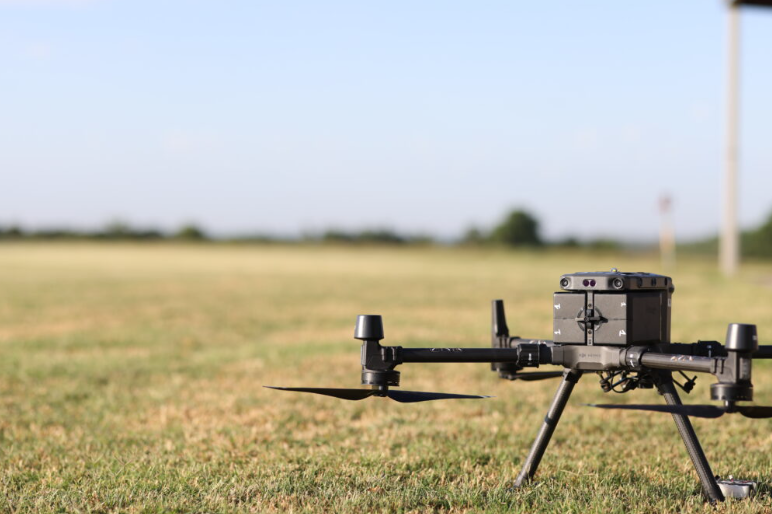
Drone supporting a Vigilant Aerospace flight test with OAIRE at OSU’s Uncrewed Aircraft Flight Station in 2024.
“Detect-and-avoid is an industry-enabling technology,” said Kraettli L. Epperson, CEO of Vigilant Aerospace Systems. “It fills a critical gap that allows autonomous aircraft to safely operate in the national airspace alongside helicopters, general aviation and other crewed aircraft.”
Today, most commercial drone operations are limited to flights within the pilot’s visual line of sight. While waivers exist, broader adoption of long-range uncrewed operations depends on systems that can independently provide safety assurances in mixed airspace. Onboard detect-and-avoid technology allows autonomous aircraft to operate without relying solely on ground-based…

