Sukhija’s blueprint for cybersecurity success – SRU News
Sukhija’s blueprint for cybersecurity success – SRU News
https://news.sru.edu/sukhijas-blueprint-for-cybersecurity-success/
Publish Date: 2026-02-20 17:07:00
Source Domain: news.sru.edu
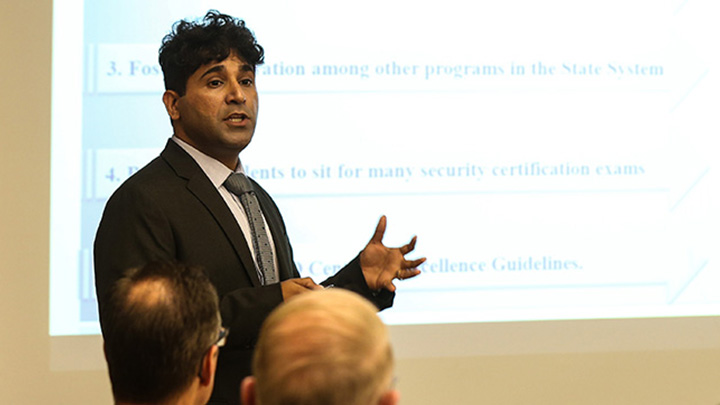
Nitin Sukhija, Slippery Rock University professor of computer science,
has help build a nationally relevant model for cybersecurity education at SRU that bridges theory and practice with measurable impact. Below is a post that he wrote for Pennsylvania’s State System of Higher Education’s “The Voices of PASSHE” blog:
Self-motivation, curiosity, and resilience are vital qualities for students to succeed in cybersecurity. This broad field focuses on ensuring the availability, integrity, and confidentiality of information systems and networks against various threats, including attacks, accidents, and failures. The primary goal of cybersecurity is to protect operations and assets by employing a range of technologies, processes, and policies. As our reliance on internet applications and systems grows, alongside the emergence of complex technologies and cyber infrastructures that can be difficult to secure, the importance of cybersecurity becomes even more critical. Furthermore, cybercriminals are continually adapting to these advancements by using automated, coordinated, and sophisticated methods to carry out cyberattacks that range from minor data breaches to large-scale disruptions.
Given this ever-evolving landscape, I have found that blended learning has significantly improved student outcomes in my classroom. This dynamic approach connects theoretical concepts with real-world applications in computing and cybersecurity, creating an engaging learning environment. It aligns perfectly with the PASSHE mission, emphasizing collaboration between employers and universities and enriching the student experience. Ultimately, this strategy enhances student engagement and success while actively contributing to the development of a skilled workforce.
As a key component of this strategy, students participate in real-world projects that encourage collaboration with peers to apply software development life-cycle processes and methodologies, including…