Accelerating science with AI and simulations | MIT News
Accelerating science with AI and simulations | MIT News
https://news.mit.edu/2026/accelerating-science-ai-and-simulations-rafael-gomez-bombarelli-0212
Publish Date: 2026-02-12 00:00:00
Source Domain: news.mit.edu
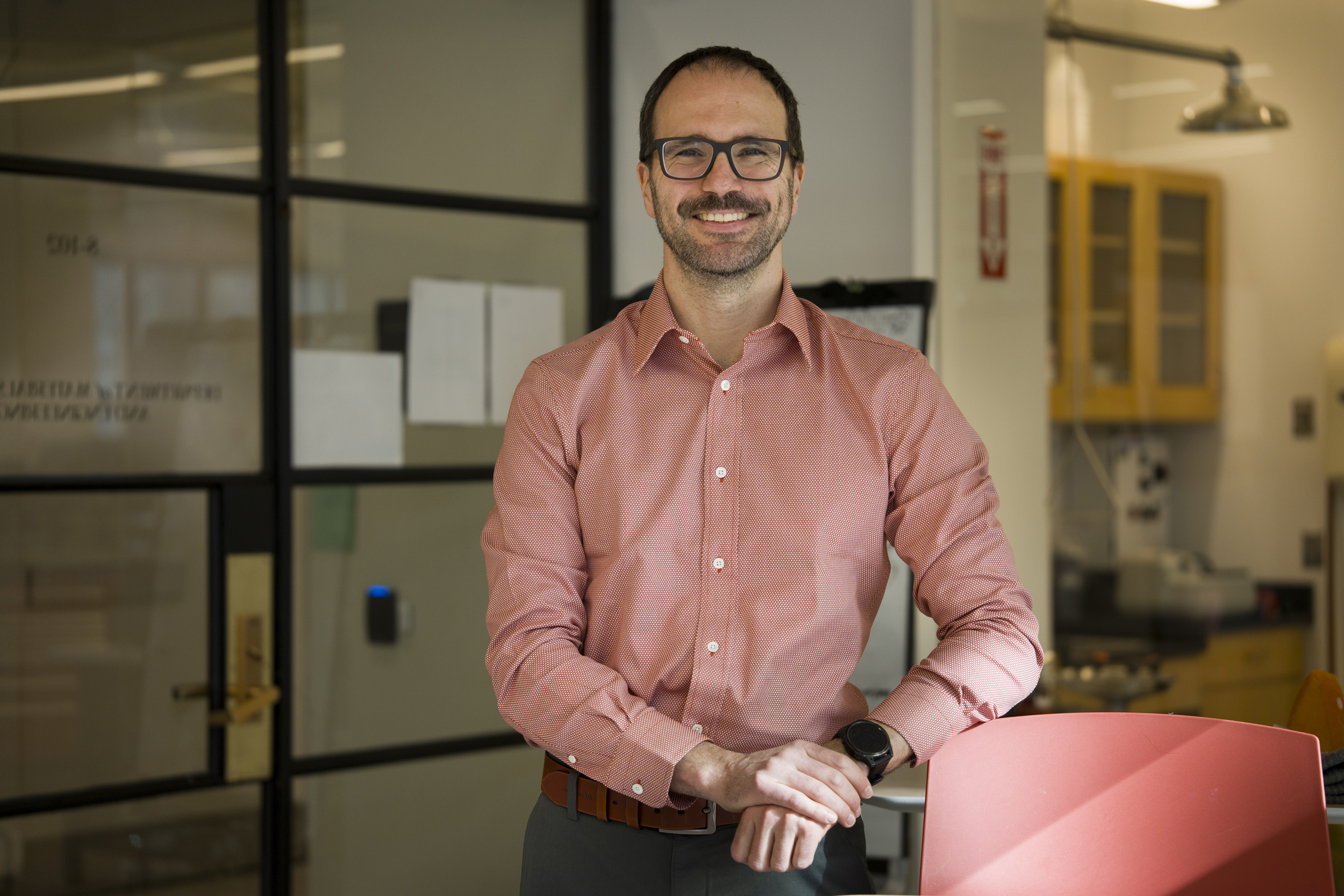
For more than a decade, MIT Associate Professor Rafael Gómez-Bombarelli has used artificial intelligence to create new materials. As the technology has expanded, so have his ambitions.
Now, the newly tenured professor in materials science and engineering believes AI is poised to transform science in ways never before possible. His work at MIT and beyond is devoted to accelerating that future.
“We’re at a second inflection point,” Gómez-Bombarelli says. “The first one was around 2015 with the first wave of representation learning, generative AI, and high-throughput data in some areas of science. Those are some of the techniques I first brought into my lab at MIT. Now I think we’re at a second inflection point, mixing language and merging multiple modalities into general scientific intelligence. We’re going to have all the model classes and scaling laws needed to reason about language, reason over material structures, and reason over synthesis recipes.”
Gómez Bombarelli’s research combines physics-based simulations with approaches like machine learning and generative AI to discover new materials with promising real-world applications. His work has led to new materials for batteries, catalysts, plastics, and organic light-emitting diodes (OLEDs). He has also co-founded multiple companies and served on scientific advisory boards for startups applying AI to drug discovery, robotics, and more. His latest company, Lila Sciences, is working to build a scientific superintelligence platform for the life sciences, chemical, and materials science industries.
All of that work is designed to ensure the future of scientific research is more seamless and productive than research today.
“AI for science is one of the most exciting and aspirational uses of AI,” Gómez-Bombarelli says. “Other applications for AI have more downsides and ambiguity. AI for science is about bringing a better future forward in time.”
From experiments to…