An illegal bioweapons lab was found in a Las Vegas garage. It’s a warning for Australia
An illegal bioweapons lab was found in a Las Vegas garage. It’s a warning for Australia
Publish Date: 2026-02-10 19:21:00
Source Domain: theconversation.com
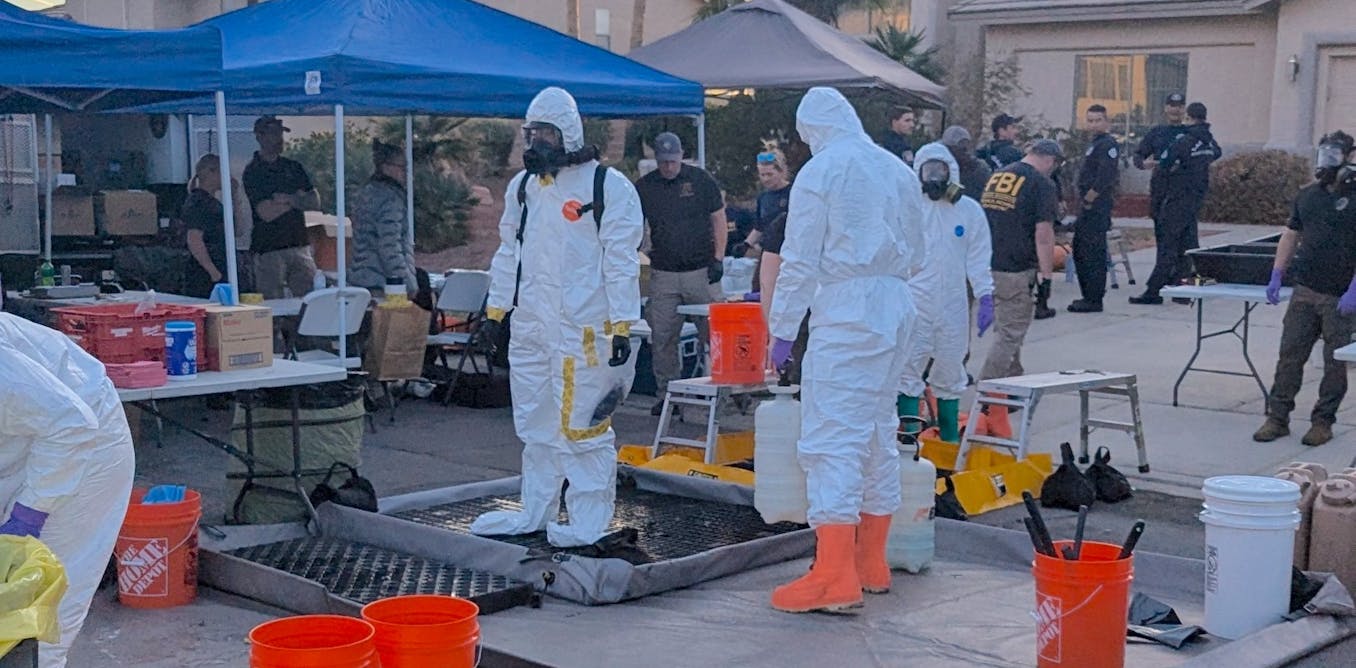
In Las Vegas last week, two people were admitted to hospital “deathly ill” after being exposed to “possible biological material, including refrigerators containing vials with unknown liquids” at a suburban home. Law enforcement quickly scrambled, taking down an illegal laboratory on the premises.
But this wasn’t a meth lab. Instead, it was allegedly filled with thousands of deadly pathogens.
The FBI has since opened an official investigation. It claims the Las Vegas lab is linked to another illegal lab in California that was shut down in 2023, which was investigated by US Congress. Congress found the California biolab had received millions of dollars from Chinese banks, and held more than 1,000 genetically modified mice as well as samples of diseases including HIV, malaria, COVID and even Ebola.
The US is now asking how many of these labs might exist. In Australia, we can’t really answer that question either.
Why are these labs emerging now?
New technologies such as artificial intelligence (AI) are putting advanced biological techniques into the hands of everyday people.
Once, you needed a doctorate’s worth of knowledge and years of experience to build a biological weapon. Now, AI may be able to teach you everything you need to know.
A study published last year showed a publicly available AI model outperformed 94% of PhD-holding virologists (on one benchmark, at least). More specialised AI systems can help you design proteins or genetic sequences in your living room. Engineers at Google have even created an entire AI-driven “virtual laboratory” to devise and synthesise new chemical compounds.
What’s more, the genetic sequences of deadly viruses are freely available online. Open-source databases such as NextStrain and PathoPlexus offer researchers the ability to share their work in the hope of developing new vaccines or antibiotics.
But those same resources can be used by malicious actors to “shop” for pathogens, then pay…


