Is NZ defence and intelligence policy aligning with AUKUS in all but name?
Is NZ defence and intelligence policy aligning with AUKUS in all but name?
Publish Date: 2026-02-03 18:00:00
Source Domain: theconversation.com
Across the Pacific and the Southern Ocean, New Zealand has been trying to strike a careful balance in its defence and surveillance approach.
While strengthening its security partnerships and expanding military capabilities, the government has so far said it is only assessing joining Pillar II of the AUKUS security pact between Australia, the United States and the United Kingdom.
Pillar I of AUKUS involves Australia acquiring nuclear-powered submarines, while Pillar II focuses on cooperation in advanced military technologies, including cyber systems, artificial intelligence, autonomous platforms, undersea capabilities and space-based surveillance.
Yet key documents, including the Defence Capability Plan 2025 and a government procurement process for long-duration aerial surveillance, suggest many of the practical steps Pillar II would involve are already underway.
These far-reaching strategic decisions are being made largely out of public view. And they raise an important question: is New Zealand effectively aligning itself with AUKUS in all but name?
From patrols to permanent surveillance
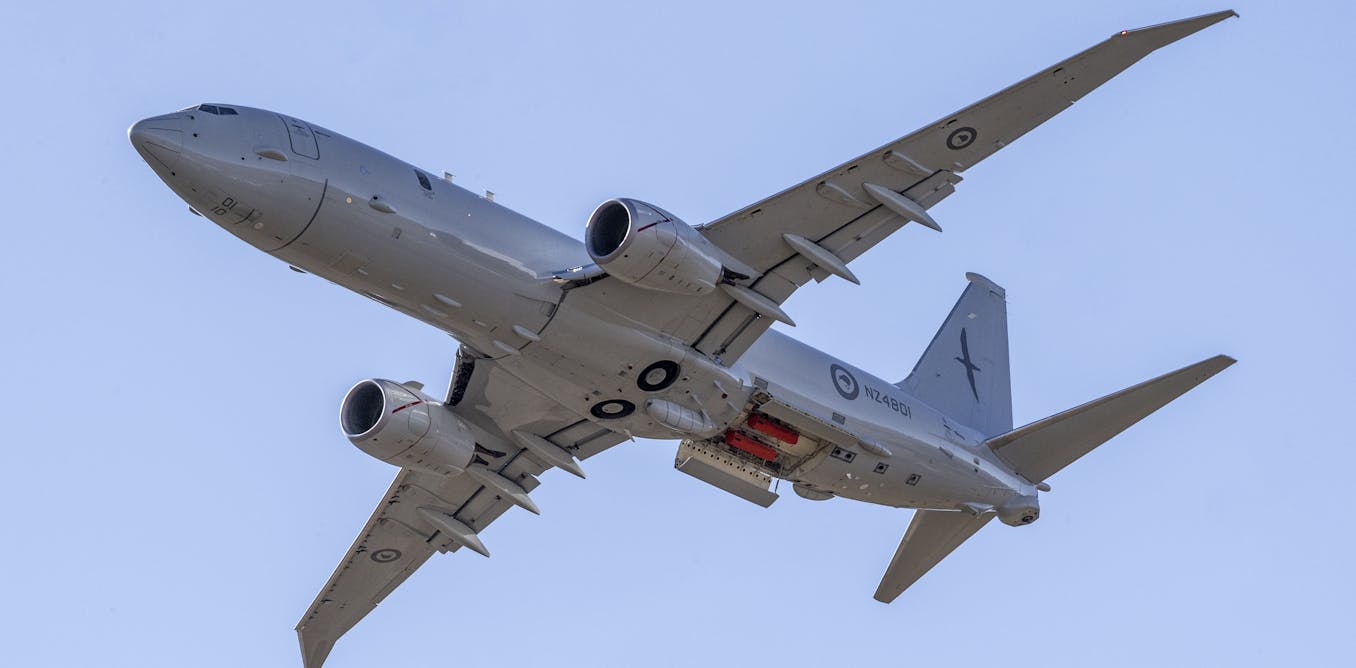
The Defence Capability Plan is the government’s long-term blueprint for upgrading New Zealand’s military. It proposes a NZ$100–300 million investment in long-range, uncrewed, remotely-piloted aircraft to provide intelligence, surveillance and reconnaissance across vast ocean areas.
As part of a broader $14 billion defence overhaul, a further $300–600 million is projected for space-based capabilities. This is aimed at integrating New Zealand within shared satellite networks and increasing operational cooperation with security allies.
In parallel, the Persistent Surveillance (Air) Project tender (which recently closed for submissions) invites industry and academia to help design a system for long-duration surveillance across the southwest Pacific and Southern Ocean, involving aircraft, spacecraft and data-management software.
Taken together, these initiatives…